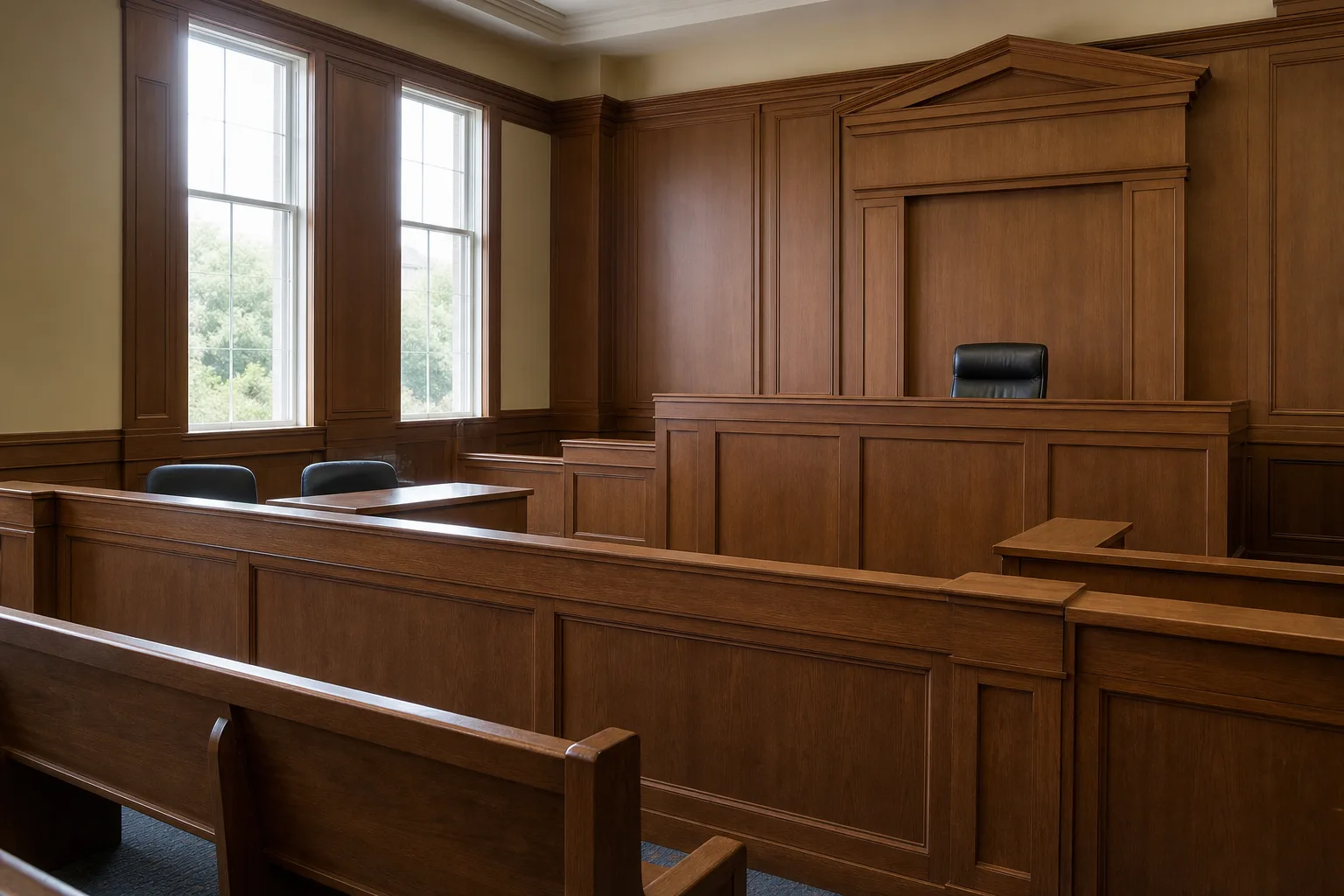
One speeding citation turned into weeks of reading court rules, insurance surcharge tables and lawyer fee agreements. What that turned up is set out here for the next driver holding an envelope from a municipal court.
The envelope, or the yellow copy handed over at the roadside, is not the case. It is an accusation with a deadline attached, and almost everything that determines the outcome happens in the quiet weeks between that deadline and the day a judge or hearing officer calls the docket. Most drivers spend those weeks doing nothing, then arrive with a story. The ones who do better spend them reading: the citation itself, the court's own rules, the officer's paperwork, and the calibration records for whatever device measured the speed. Each stage decides something specific, and knowing what it decides tells you where the effort belongs.
The response deadline decides whether you still have a case
Look first for the date, then for what the court says the date means. Some jurisdictions give fifteen days from issuance, others thirty, and a few count from a mailing date printed nowhere obvious. Missing it rarely produces a dramatic knock at the door; what it produces is a default judgment, the fine plus late penalties, and in many states a license suspension referral that costs more to undo than the ticket ever did. A careful reader checks three things on the citation: the response deadline, the statute or code section charged, and whether the box marked for a mandatory court appearance is checked. That last box changes the whole procedure.
Contest or mitigation decides what you are allowed to argue
Courts generally offer two different doors, and they are not interchangeable. Contesting means denying the violation and putting the state to its proof, which preserves the right to see the evidence, question the officer, and win outright. Mitigation, sometimes called an explanation hearing, concedes the violation and asks only for a reduced fine or a payment plan; the conviction usually still lands on the driving record, and the insurance consequence follows it. Deferral or a diversion program is a third door in some places, dismissing the charge after a clean period. Read the form language slowly, because checking the wrong box waives the right to see anything at all.
Discovery decides how strong the state's paperwork really is
Once a contest is entered, most jurisdictions let a defendant request the evidence, and the request is often a short written demand to the prosecutor or the citing agency. What is worth asking for is narrow and specific: the officer's field notes and any narrative report, the certification showing the officer was trained on the device used, the maintenance and calibration log for that radar unit, lidar, or in-car system, and the tuning fork certifications where they apply. Measurement traceability is not a boutique concern; the National Institute of Standards and Technology is the federal body responsible for measurement standards generally, and enforcement devices are supposed to trace back to that framework. Gaps in the log are common, and they matter.
Negotiation decides what the record will say
In a great many courts the case never reaches proof, because the prosecutor and the driver reach an agreement first, sometimes at a pretrial conference and sometimes in a hallway ten minutes before the docket. What is being traded is usually the charge, not the money: a moving violation reduced to a non-moving equipment offense, a defective speedometer, or a parking-adjacent count that carries no points. A careful reader checks what the substitute charge does downstream, because a plea that keeps the fine identical but keeps points off the abstract is often the better deal by a wide margin over three years of premiums. Ask directly whether the amended charge is reportable.
The hearing decides only what is left
By the time the case is called, the questions have narrowed considerably. The officer either appears or does not, and non-appearance often ends the matter. If the officer testifies, the hearing turns on foundation: whether the device was calibrated within the required interval, whether the operator was certified, whether the notes match the testimony, and whether the vehicle described is identifiably yours. Standards of proof vary, since many states treat routine speeding as a civil infraction decided by a preponderance rather than beyond a reasonable doubt. Bring copies of everything, arrive early enough to check the docket posting, and speak only to the record in front of you.
The sequence rewards patience more than eloquence. A driver who reads the citation on day one, chooses the right door on day two, and asks for the calibration log in week two arrives at the hearing with something the state has to answer.